“Japan is expensive.”
How many times have you heard that phrase? Probably many. And for years, this perception of an unattainable luxury destination for most Brazilians kept us from even dreaming about it. But what if I told you that this is only a half-truth—a myth that needs to be unraveled?
The truth is that Japan can be incredibly affordable, as long as you know where to look and how to plan. Forget the clichés of Tokyo and Kyoto with their exorbitant prices. The true heart of Japan—its rich culture, breathtaking landscapes, and delicious cuisine—is within your reach, and yes, with a budget that won’t leave you in the red.
Shall we break this paradigm together?
Demystifying the Myth of Expensive Japan: Why the Wrong Perception?
Beyond the Obvious: Amazing and Affordable Destinations in Japan
Smart Strategies to Save on Transportation
Food in Japan: Eating Well for Less
Accommodation in Japan: Options for Every Budget
Immersing Yourself in the Culture: Free or Almost Free
Frequently Asked Questions
Conclusion: Your Japanese Dream Is Possible
Demystifying the Myth of Expensive Japan: Why the Wrong Perception?
The idea that Japan is a financially prohibitive destination is one of the biggest barriers for many travelers—and I fell into that trap myself. I remember postponing my first trip for years, convinced I would need a king’s budget just to set foot there.
This perception often comes from a combination of factors, including the cost of international flights—which can indeed be expensive depending on the time of year—and the image of cities like Tokyo and Kyoto, where hotel prices and some restaurants can be intimidating.
However, focusing only on these aspects is like judging a book by its cover while ignoring the richness of its pages. Japan is a country with surprising economic diversity, and there’s a whole universe of options that fit more modest budgets.
The media and pop culture sometimes reinforce this image of luxury and cutting-edge technology, associating Japan with high-cost experiences. We see images of neon-lit neighborhoods in Tokyo, Michelin-starred restaurants, and futuristic capsule hotels, but we rarely explore everyday life: local markets, peaceful temples, and rural landscapes where life flows in a much more affordable way.
The key to demystifying expensive Japan is to change the lens through which we see it and open ourselves to destinations beyond the obvious tourist hotspots.
Cost of Living vs. Travel Costs
It’s essential to differentiate between the cost of living for residents and the cost of traveling as a tourist.
While rent in Tokyo can be extremely high, the cost of a simple meal at a local restaurant or a subway ticket is comparable—and often even cheaper—than in many major Western cities. Supermarket products, for example, are surprisingly affordable.
What often makes a trip expensive are the traveler’s choices: large hotel chains, private transfers, and gourmet restaurants. By opting for local and authentic alternatives, you not only save money but also experience Japan in a much more genuine way.
Don’t fall into the trap of thinking that a cheap trip means sacrificing quality or experiences. On the contrary, many of the most memorable experiences in Japan are free or low-cost.
Thinking of “affordable Japan” means thinking about a more authentic trip—where you blend in with locals, discover hidden gems, and enjoy Japanese hospitality without hurting your wallet.
For example, some of my best meals were in small family-run restaurants tucked away on side streets where the food was spectacular and the price unbelievably low.
The Impact of Exchange Rates and Planning
The value of the Japanese yen compared to the Brazilian real—or other strong currencies—is a crucial factor.
Careful research and early planning can make all the difference. Buying airline tickets months in advance, monitoring currency exchange rates, and being flexible with travel dates are strategies that can significantly reduce costs.
Japan also has different tourist seasons with varying prices for accommodations and flights. Traveling during the low season can lead to substantial savings without compromising the quality of your experience.
I always try to book flights at least six months in advance, and the price difference is enormous. It’s an effort that truly pays off.
Another key factor is flexibility. If you’re not tied to specific dates and can travel during less popular months, your chances of finding cheaper flights and accommodations increase dramatically.
Monitoring the yen’s exchange rate and buying when it’s lower is also a great strategy. Remember: planning is not limitation—it’s freedom to travel better and more often.
Beyond the Obvious: Amazing and Affordable Destinations in Japan
When we think of Japan, our minds quickly fill with images of Tokyo, with its skyscrapers and neon lights, and Kyoto, with its Buddhist temples and geishas.
While these destinations are undoubtedly magnificent, they are also the most expensive and crowded.
The true magic of affordable Japan lies in exploring lesser-known regions where the culture is just as rich, the scenery just as breathtaking, and the food just as delicious—but the prices are far more wallet-friendly.
Having explored Japan from north to south, I can guarantee that some of my most authentic and unforgettable experiences happened far from the spotlight.
Imagine walking through preserved historical streets, interacting with locals at morning markets, or enjoying a bowl of authentic ramen for a fraction of the price you’d pay in Tokyo.
These are the moments that truly define a journey—and they’re abundant in the destinations we’re about to explore.
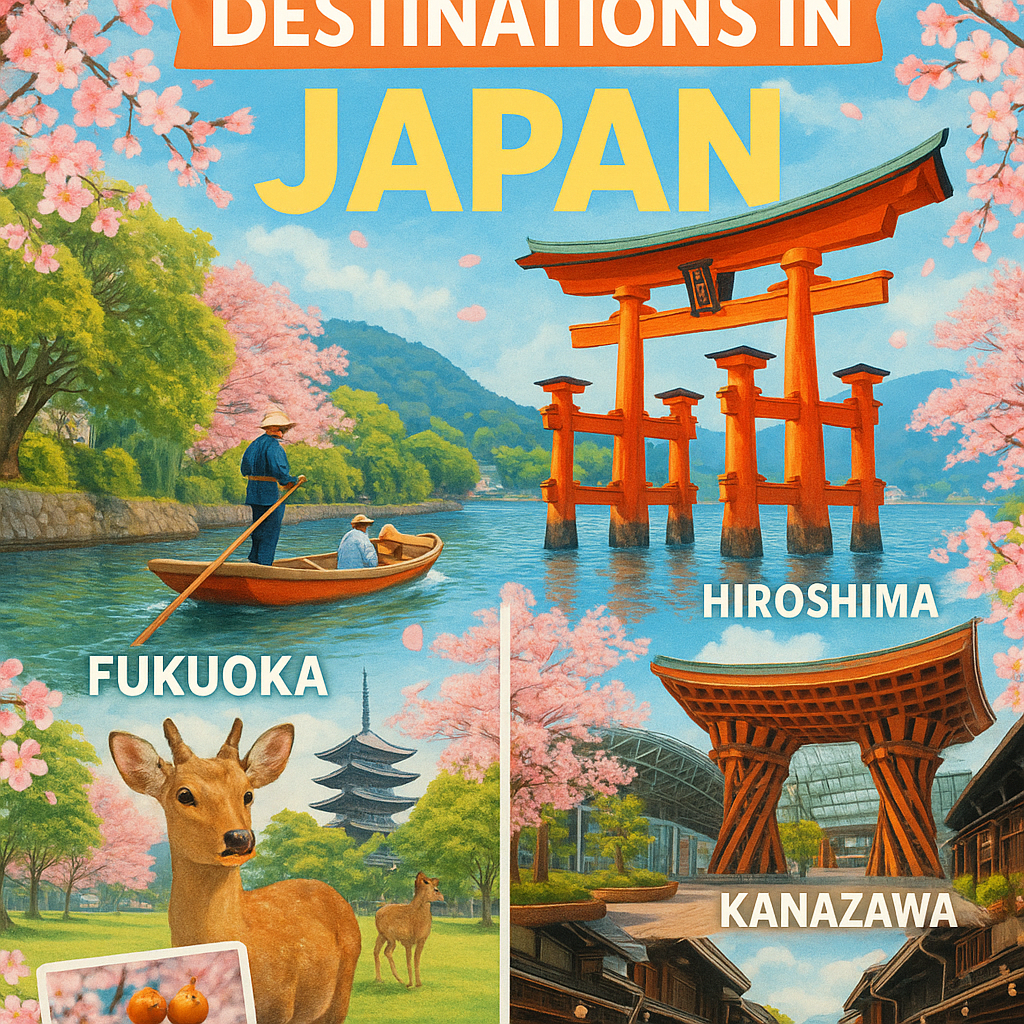
Fukuoka: The Culinary Paradise of the South
Fukuoka, located on the island of Kyushu, is a hidden treasure for travelers seeking authentic and affordable food experiences.
Known as the home of Hakata ramen, the city offers an incredible street food culture. The yatai—open-air food stalls—are a local institution where you can enjoy ramen, yakitori (grilled skewers), and other delicious dishes for very little money.
The city itself is also more relaxed, with lower accommodation and transportation costs compared to major metropolitan areas.
Fukuoka also features the beautiful Ohori Park, an urban oasis perfect for a picnic or a free walk. The Tenjin district is a shopping hub where you can find everything from large department stores to smaller affordable boutiques.
Expert tip: try motsunabe, a local hot pot made with beef offal—an explosion of flavor.
Hiroshima: Peace, History, and Local Delicacies
Hiroshima is a city that rose from the ashes with a powerful message of peace and resilience.
Visiting the Peace Memorial Park and Peace Museum is a deeply moving experience with minimal entrance fees.
But Hiroshima is much more than its recent history. Its local cuisine—especially okonomiyaki (a savory pancake with various ingredients)—is famous throughout Japan and can be enjoyed at reasonable prices.
From Hiroshima, you can easily take a low-cost ferry to Miyajima Island, home to the iconic floating Torii gate of Itsukushima Shrine. The island, with its friendly deer and mountain trails, offers a full day of exploration with controlled costs.
Kanazawa: The “Little Kyoto”
Kanazawa is often called “Little Kyoto” thanks to its preserved geisha districts, serene gardens, and impressive castles—but without the crowds or high prices.
The Kenrokuen Garden, considered one of Japan’s three most beautiful landscape gardens, has a modest entrance fee and breathtaking beauty in every season.
The samurai and geisha districts, such as Nagamachi and Higashi Chaya, allow you to dive into the Edo period with traditional wooden houses and stone streets.
The Omicho Market, known as “Kanazawa’s kitchen,” is a feast for the senses, offering fresh seafood and local specialties at affordable prices.
Must-do experience: attend an authentic tea ceremony in one of the historical districts.
Nara: Where Deer Roam Freely
Just a short train ride from Kyoto or Osaka, Nara is famous for its park where thousands of wild sika deer roam freely and are considered messengers of the gods.
Feeding them special crackers (sold for about 200–300 yen) is a fun and interactive experience.
Within the park, Todai-ji Temple houses one of the largest bronze Buddha statues in the world.
Nara offers a peaceful and historical atmosphere, perfect for relaxing walks through ancient streets.
Takayama: The Heart of the Japanese Alps
Nestled in the Japanese Alps, Takayama is a charming town known for its preserved Edo-period streets, traditional wooden houses, and vibrant morning markets.
The Jinya-mae and Miyagawa markets are great places to find local products, crafts, and snacks at very reasonable prices.
Takayama is also a gateway to Shirakawa-go, a UNESCO World Heritage village known for its traditional gassho-style houses.
Don’t miss the Takayama Matsuri, one of Japan’s most beautiful festivals, held in April and October.